
Anyone who has ever written for outfits like the Times knows that sucking up to authority will always serve one well professionally. Consider the eagerly establishment-pleasing Koerth-Baker, a "science editor" who scrupulously follows the journalism-school rules of the road: She dredges up the perennial "academic" so that it appears that her reporting has no agenda -- she's just sharing what some "expert" thinks.
To prove what idiots her fellow Americans are, she turns to her expert, Dr. Viren Swami, a psychology researcher at a university which, we discovered, ranked 70th out of 106 UK universities on "research standards."
Swami's expertise to judge a large part of the population fantasists when it comes to security-state ops seems questionable. His doctorate is in "Body Size Ideals across Cultures." His post-doctoral study was on "men and masculinities." He has investigated such issues as "Why do hungry and stressed men idealize a heavier body size than do satiated and unstressed men?" and "the impact of body art (tattoos and piercings) on interpersonal perceptions."
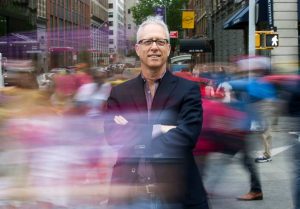
But more recently, he says, he's been studying "why some people are more likely than others to accept and disseminate conspiracy theories." Swami, in his picture, looks barely out of his twenties. Surely too young to remember all the security-service perfidy and cover-ups revealed by official investigations in both the United States and the UK. But Koerth-Baker assures us that Swami does include "conspiracy belief" in his many studies, and shares his wisdom with us:
"The best predictor of belief in a conspiracy theory is belief in other conspiracy theories," says Viren Swami, a psychology professor who studies conspiracy belief at the University of Westminster in England. Psychologists say that's because a conspiracy theory isn't so much a response to a single event as it is an expression of an overarching worldview.
Turning the Eye Chart Upside Down
Koerth-Baker invokes a tired and over-used Wikipedia-style meme from the late historian Richard Hofstadter on the "paranoid style" (also invoked by a rabid if purportedly liberal Los Angeles Times writer to dismiss a book by yours truly on connections between the Bush clan, their circle, and improperly understood American tragedies, while managing to ignore the book's massive documentation -- including more than a thousand footnotes). Koerth-Baker then says that:
"Since Hofstadter's book was published, our access to information has vastly improved, which you would think would have helped minimize such wild speculation. But according to recent scientific research on the matter, it most likely only serves to make theories more convincing to the public."
Perhaps that is because, of the many hundreds of books on the JFK assassination, about 95 percent of the best written and researched volumes, from credentialed academics, journalists and researchers, conclude that John F. Kennedy was not killed by a lone kook, but by real, powerful people who actively endorsed and sponsored overthrows and murders of elected leaders around the world. No matter. The author continues:
"Perfectly sane minds possess an incredible capacity for developing narratives, and even some of the wildest conspiracy theories can be grounded in rational thinking, which makes them that much more pernicious. Consider this: 63 percent of registered American voters believe in at least one political conspiracy theory, according to a recent poll conducted by Fairleigh Dickinson University."
Her assumption is that, in a country perennially employing tens of thousands of top-secret covert operatives, homicide-trained assassins and "special forces" enthusiasts, no one has any reason to suspect that any event involving some kind of death or mayhem was ever engineered on an organized basis.
***
"In 2010, Swami and a co-author summarized this research in The Psychologist, a scientific journal. They found, perhaps surprisingly, that believers are more likely to be cynical about the world in general and politics in particular. Conspiracy theories also seem to be more compelling to those with low self-worth, especially with regard to their sense of agency in the world at large. Conspiracy theories appear to be a way of reacting to uncertainty and powerlessness.
We are thus supposed to accept there is something essentially wrong with people who lose hope after seeing, time and time again, the most idealistic, reformist leaders inexplicably snuffed out, and their crusades dashed. This loss of hope and faith in a clearly dysfunctional system is seen as illness.
And, by the way, that article in "The Psychologist" (for which she provides no link or citation) was only three pages long.
Put the Blame on the Brain
"In these moments of powerlessness and uncertainty, a part of the brain called the amygdala kicks into action. Paul Whalen, a scientist at Dartmouth College who studies the amygdala, says the amygdala jump-starts the rest of the brain into analytical overdrive -- prompting repeated reassessments of information in an attempt to create a coherent and understandable narrative, to understand what just happened, what threats still exist and what should be done now. This may be a useful way to understand how, writ large, the brain's capacity for generating new narratives after shocking events can contribute to so much paranoia in this country."
On the other hand, there is no mention of what part of the brain causes some people to reflexively -- if illogically -- trust just about anything published in establishment media like the New York Times, The Atlantic, or stated on PBS. Even after they get so very many things wrong time and again.
Avoid Knowledge!
Koerth-Baker invokes the "backfire effect" to explain why conspiracy theorists are supposedly resistant to official narratives. But that effort actually, well, backfires.
(Note: You can view every article as one long page if you sign up as an Advocate Member, or higher).
 3
3
 3
3
 3
3