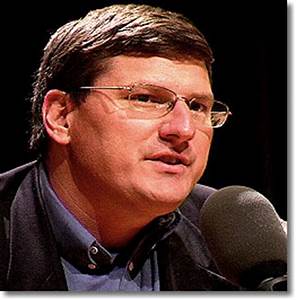

"You are our closest partners," Stoltenberg continued. "And your membership in NATO would increase our shared security." That he said this with no apparent recognition of the irony contained in those words, and that the ambassadors of Finland and Sweden were able to avoid shuffling in embarrassment, is a testimony to either hubris-driven self-delusion, collective ignorance of historical context, or both.
Stoltenberg moved on to the final scene in this one-act drama.
"The applications you have made today are an historic step," he told the Nordic ambassadors.
"Allies will now consider the next steps on your path to NATO. The security interests of all Allies have to be taken into account. And we are determined to work through all issues and reach rapid conclusions. Over the past few days, we have seen numerous statements by Allies committing to Finland's and Sweden's security. NATO is already vigilant in the Baltic Sea region, and NATO and Allies' forces will continue to adapt as necessary."
Stoltenberg closed the made-for-television family special with words that would soon come back to haunt him. "All Allies agree on the importance of NATO enlargement. We all agree that we must stand together. And we all agree that this is an historic moment, which we must seize."
Enter Erdogan
A happy ending? Not so fast. Enter Turkish President Recep Tayyip Erdogan, who decided he would crash Stoltenberg's scripted moment. Not all NATO members were in accordance with the bid by Finland and Sweden to join the alliance. Since NATO is a consensus-driven organization, all it takes to ruin this made-for-TV moment was one disaffected member. That member was Turkey.
"As all NATO allies accept Turkey's critical importance to the alliance," Erdogan wrote in a guest essay he penned for The Economist on May 30,
"it is unfortunate that some members fail fully to appreciate certain threats to our country. Turkey maintains that the admission of Sweden and Finland entails risks for its own security and the organization's future. We have every right to expect those countries, which will expect NATO's second-largest army to come to their defense under Article 5, to prevent the recruitment, fundraising and propaganda activities of the PKK [the Kurdish People's Party], which the European Union and America consider a terrorist entity."
Erdogan called for the extradition from Sweden of "members of terrorist organizations" as a pre-condition for Turkey considering its application for NATO membership. Erdogan also demanded that both Sweden and Finland end their respective arms embargoes against Turkey, imposed in 2019 in response to Turkey's incursion into northern Syria that targeted Kurdish groups affiliated with the PKK.
"Turkey stresses that all forms of arms embargoes " such as the one Sweden has imposed on my country " are incompatible with the spirit of military partnership under the NATO umbrella. Such restrictions not only undermine our national security but also damage NATO's own identity."
As things stand, neither Finland nor Sweden appears prepared to accede to Erdogan's demands. Despite high-level meetings between delegations from both Finland and Sweden with Turkish officials, no headway appears to have been made.
According to Fahrettin Altun, an adviser to Erdogan, neither Finland nor Sweden have put anything discernable on the table. Turkey, Altun told a Swedish newspaper, needs more than just words. "It is not right that Finland and Sweden waste NATO's time at this critical moment," Altun declared.
Complicating matters further is the fact that Turkey appears to be on the cusp of launching a major military operation into northern Syria specifically targeting the very Kurdish group " the People's Protection Units, or YPG " that Erdogan accuses both Finland and Sweden of supporting.
A similar incursion in 2019 triggered the arms embargo against Turkey that Erdogan now demands be lifted. And the hue and cry that can be anticipated from human rights groups if Turkey follows through with its threat to invade northern Syria will not only make it virtually impossible for either Sweden or Finland to give Erdogan the concessions he is demanding, but also further strain Turkish relations with other NATO members, such as the United States, France and Great Britain, all of whom view Turkey's presence in northern Syria as complicating their ongoing operations inside Syria targeting the Islamic State (IS). The fact that the U.S., France and the U.K. have allied themselves with the YPG in this effort only muddies the waters.
Stoltenberg will convene the annual NATO summit in Madrid on June 29. NATO has much on its plate, with trying to craft a viable response to Russia's invasion of Ukraine topping the list.
(Note: You can view every article as one long page if you sign up as an Advocate Member, or higher).
 3
3
 3
3
 2
2