If we really want to narrow our waistbands, we have to narrow the income gaps that divide us.
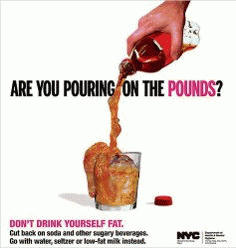
Some 58 percent of New Yorkers, explains Mayor Michael Bloomberg, currently rate as either overweight or obese. Their excess pounds are driving up the city's health care costs, he argues, and even putting their lives in jeopardy.
"Obesity will kill more people than smoking in the next couple of years," Bloomberg says.
Maybe so, his critics counter, but banning soda pop won't end obesity. Bloomberg's ban, they contend, would be unenforceable. And why pick on soft drinks?
This debate punches too many political and media hot buttons -- think "big government" and "nanny state" -- to fade any time soon. But the focus on calorie-laden foods and drinks misses the real story. If we want to get serious about fighting obesity, we need to look at the social dynamics that drive people to eat and drink more and more of the things they should avoid.
And the most powerful driver of this unhealthy behavior? Economic inequality.
"Wider income gaps," as British social scientist Kate Pickett and her colleagues note in a comprehensive study of obesity across the world's wealthiest nations, translate into "wider waistbands."
In the
Experts offer many explanations for our losing battle against the bulge. Fast food is fattening. Restaurants are super-sizing portions. Corporate food giants have engineered more fatty, sugary, and salty products.
All these factors no doubt contribute to the growing incidence of obesity. But they don't explain why some states in the
Inequality does explain these differences. The states within our country -- and the nations within the developed world -- with lower obesity rates just happen to be the states and nations with the greatest economic equality.
That spike in
But how exactly does inequality make us fat? Epidemiologists -- the scientists who study the health of populations -- point to two closely intertwined phenomena: social status and stress.
In developed nations, the epidemiological studies show, obesity levels rise as income and social status fall. On each rung of the economic ladder, people tend to be more overweight than the people on the rungs above them.
(Note: You can view every article as one long page if you sign up as an Advocate Member, or higher).
 1
1
 1
1
 1
1