More and more often citizens using smartphones to videotape police doing wrong are making a difference. This article offers some tips on how to raise your chances of successfully recording a video and getting it out virally.
Recently police were accused of beating a man to death. Reportedly, one person called 911 and told them that he'd videotaped the man being murdered by the police. Salon reports:
Following the death of father of four David Sal Silva last week, his family's attorneys are calling for police to release bystander video evidence that reportedly shows California Highway Patrol officers brutally beating the 33-year-old. A video from a surveillance camera (which does not show the scene close-up) has been released and shows the man repeatedly struck with a baton. Local press have also reported on details from a 911 call made, in which witness Sulina Quair, 34, said "There is a man laying on the floor and your police officers beat the (expletive) out of him and killed him. I have it all on video camera."-We videotaped the whole thing." Officers say they were responding to a call about an intoxicated man and that Silva had fought them.
This suggests that if you are ever in a situation where you have the opportunity to videotape something, there's a risk the police may confisticate the camera or phone. Considering that risk, here are some things to keep in mind as you take out your camera or phone.
1-Shoot with the intention of immediately uploading it or emailing it. Facebook and youtube are probably the easiest and fastest.
2-keep it short. If you're not near WIFI, a long video file may be too long to send, or take too long to upload. But don't keep it too short so you miss anything important. You should be able to edit what you send so it works
3- let the media know about it ASAP. Contact producers in newsrooms. I did this with a two short videos I took and within a few hours they had well over 50,000 views on youtube and that doesn't include the showings on TV.
4-If the police tell you to stop shooting, you don't necessarily have to stop. Most cases where police arrested people for videotaping them have eventually led to not only dropped charges or acquittals, but, for some, five or six figure settlements where the arrested people are paid.
5- Clearly, as this story shows, police can be dangerous, so be careful. Make sure you are at a distance from the immediate crime scene so they can't accuse you of interfering with them doing their duty. Getting too close COULD get you arrested. Four feet is probably too close. Ten feet might be okay. The police will make the call. Police departments have been successfully sued for mishandling journalists-- ie., arresting them for taking photos. If you are with other people who are not videotaping or taking photos and the police are singling you out from the crowd, that's probably not allowable and you may be able to sue them if they do anything to you.
6- If you cover activism regularly for an area, get a formal position from the police department on citizens rights to photograph or videotape police-- ahead of time. Organizers get permits ahead of time. It's reasonable to get a statement about this too.
Once you get the recording. Step away and upload or email it as fast as you can, both if possible. Then notify producers for local TV stations and national news services.
You can make a difference. Don't let police over-reach stop you.
You may want to practice shooting footage of police. Go to demonstrations or public events with a police presence. Practice getting up as close as you can. Get used to the feel of videotaping and photographing police. Use the footage if you have a blog or write for a community blog like Opednews.com.
Here's a screen shot from a video I shot-- the only one to catch a guard actually spraying pepper spray at peaceful protesters at the National Air and Space Museum.
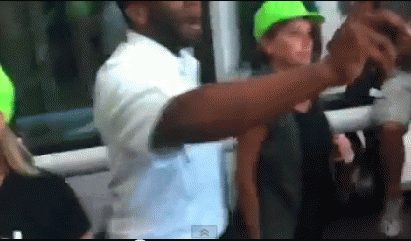
And here's the video I shot. I'd uploaded it to youtube within a few minutes of shooting it.
video by rob kall, opednews.com
 3
3
 3
3
 2
2