
This piece was reprinted by OpEd News with permission or license. It may not be reproduced in any form without permission or license from the source.
Reprinted from consortiumnews.com by Unknown
By dunning NATO nations to chip more money into the military alliance, President Trump may inadvertently cause some Europeans to rethink the over-the-top anti-Russian propaganda.
President Donald Trump's politically incorrect behavior at the gathering of NATO leaders in Brussels on Thursday could, in its own circuitous way, spotlight an existential threat to the alliance. Yes, that threat is Russia, but not in the customary sense in which Westerners have been taught to fear the Russian bear. It is a Russia too clever to rise to the bait -- a Russia patient enough to wait for the Brussels bureaucrats and generals to fall of their own weight, pushed by financial exigencies in many NATO countries.
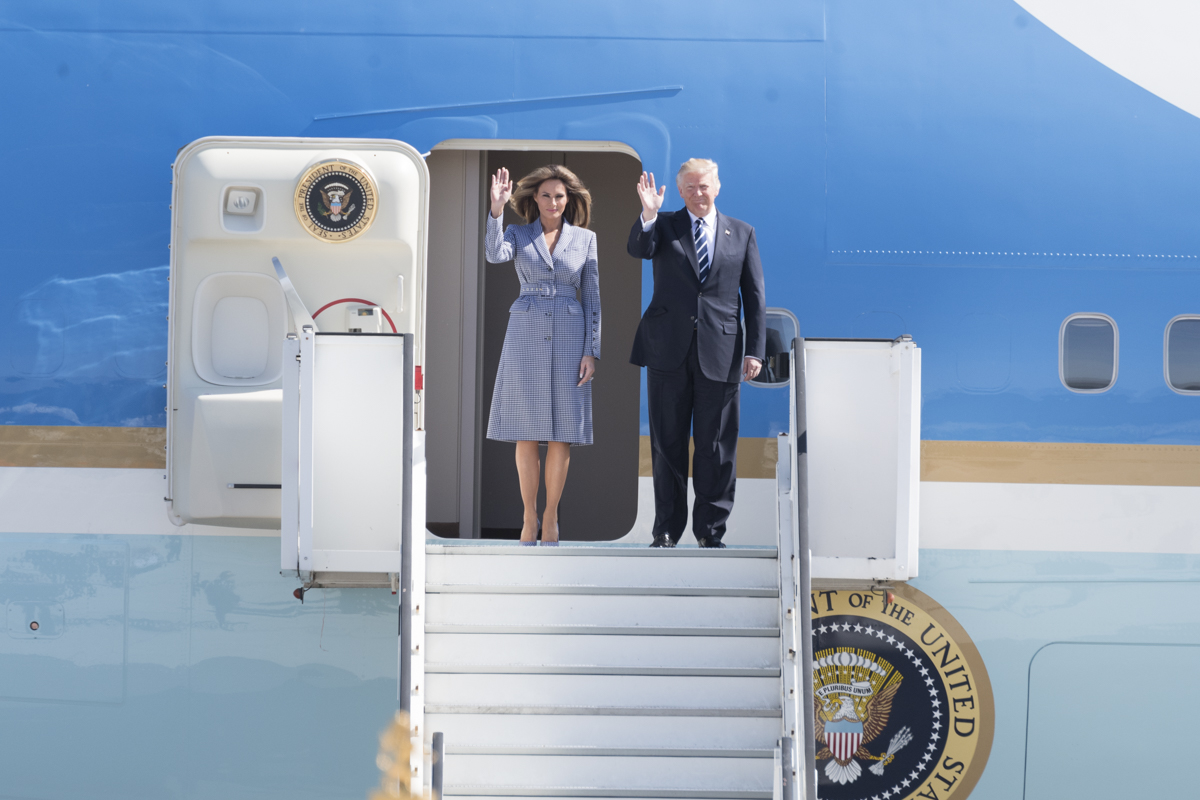
President Donald J. Trump and First Lady Melania Trump traveled to Brussels, Belgium on Wednesday evening for their fourth stop on their trip abroad. President Trump met with leaders from around the world before the NATO Summit in Brussels. (White House photo)
At that point it will become possible to see through the West's alarmist propaganda. It will also become more difficult to stoke artificial fears that Russia, for reasons known only to NATO war planners and neoconservative pundits, will attack NATO. As long as Russian hardliners do not push President Vladimir Putin aside, Moscow will continue to reject its assigned role as bà ªte noire.
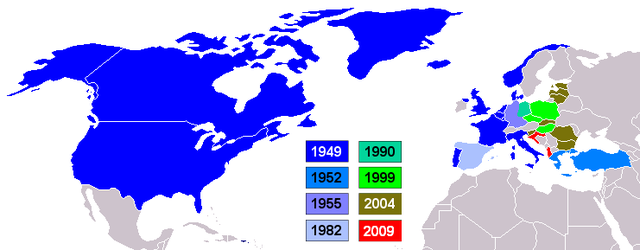
First a request: Let me ask those of you who believe Russia is planning to invade Europe to put down the New York Times for a minute or two. Take a deep cleansing breath, and try to be open to the possibility that heightened tensions in Europe are, rather, largely a result of the ineluctable expansion of NATO eastward over the quarter-century since the Berlin Wall fell in 1989.
Actually, NATO has doubled in size, despite a U.S. quid-pro-quo promise in early 1990 to Russian leader Mikhail Gorbachev in early 1990 not to expand NATO "one inch" to the east of Germany. The quid required of Russia was acquiescence to a reunited Germany within NATO and withdrawal of the 300,000-plus Russian troops stationed in East Germany.
The U.S. reneged on its quo side of the bargain as the NATO alliance added country after country east of Germany with eyes on even more -- while Russia was not strong enough to stop NATO expansion until February 2014 when, as it turned out, NATO's eyes finally proved too big for its stomach. A U.S.-led coup d'etat overthrew elected President Viktor Yanukovych and installed new, handpicked leaders in Kiev who favored NATO membership. That crossed Russia's red line; it was determined -- and at that point able -- to react strongly, and it did.
These are the flat-facts, contrasting with the mainstream U.S. media's propaganda about "Russian aggression." Sadly, readers of the New York Times know little to nothing of this recent history.
Today's Russian Challenge
The existential threat to NATO comprises a different kind of Russian "threat," which owes much to the adroitness and sang froid of Russian President Vladimir Putin, who flat-out refuses to play his assigned role of a proper enemy -- despite the Western media campaign to paint him the devil incarnate.
(Note: You can view every article as one long page if you sign up as an Advocate Member, or higher).
 6
6
 3
3
 2
2